
Tracked · · by Timo
How Tracked is made
A strategic hacker heist game that takes place inside a fictional operating system. What Tracked is, how it's made, where AI helps and where it stands right now.
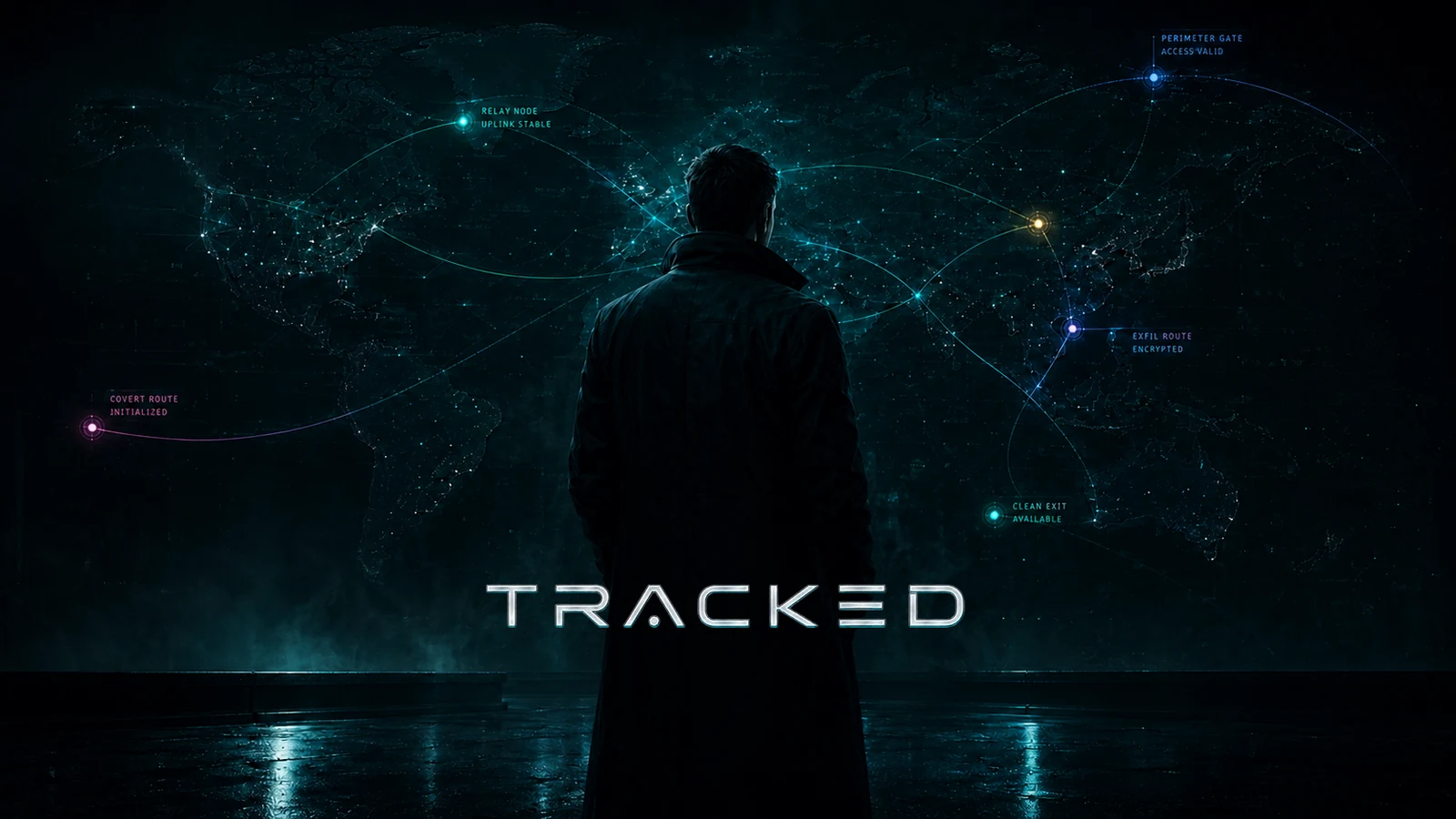
Hi, I'm Timo. I develop games under the name Paper Node Games, and next to Not my Forest! I'm working on Tracked, a strategic hacker-heist game played through a fictional operating system. It's coming to Steam for Windows.
My biggest inspiration is Uplink, the hacking game Introversion Software released in 2001. I always loved playing it, and I still think the idea behind it is brilliant. Two things bothered me most, though: a lot of it got repetitive, and at some point the best route was simply the one with the most nodes. Which ones hardly mattered, as long as there were plenty.
That's where the idea for Tracked came from: a game about a job, a plan and the question of whether you get out in time. The route should be a real decision, not a matter of counting nodes, and the jobs shouldn't all play the same.
The demo trailer shows what that feels like. Everything in it is real gameplay from the current demo build.
Read the visual description
Tracked Demo trailer, 62 seconds, music only. Real gameplay from the current Demo build: an archive job for Vireo. The job is accepted, a relay is probed, a route is planned and connected, the access tool is bound under an active Trace, the handover manifest is read in the terminal, the payroll export is transferred, the session is closed with Clean Exit, the payment arrives and The Wire reports on the job. On-screen lines: THE FILE IS YOURS. THE TRACE ISN'T DONE. PLAN THE ACCESS. RUN THE OPERATION. DISAPPEAR IN TIME. THE WORLD REMEMBERS. End card: Tracked Demo, Wishlist on Steam, a strategic hacker-heist.
A job, a route, a Trace
In Tracked you work as an operator. A job arrives in your messages: sometimes an archive somebody wants, sometimes a file that needs to disappear. Before you connect, you read the briefing, gather what you know about the target and plan your route through relays around the world. More relays aren't automatically better: each one changes latency, Trace damping and how visible you are, and fast, quiet and safe rarely point to the same route.
Once you're connected, the plan turns into a string of decisions. Access tools, transfers and Trace monitoring run at the same time and share the limited resources of your rig. And once an active Trace begins, the trail leads back to you step by step.
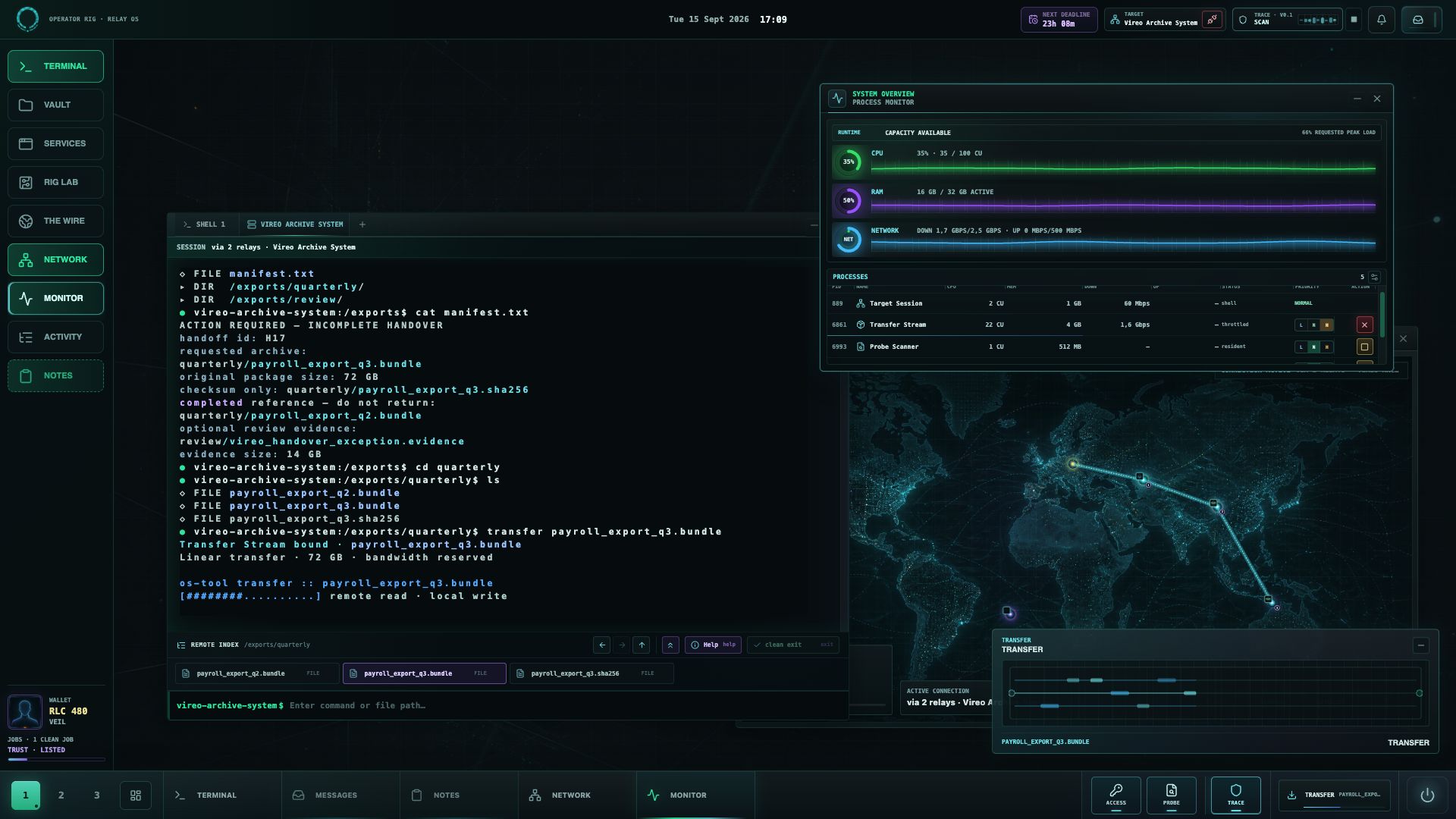
Getting what you came for doesn't make you safe. You can disappear at once or spend precious time covering your tracks. A Clean Exit closes your session in a controlled way, but even that takes a few seconds.
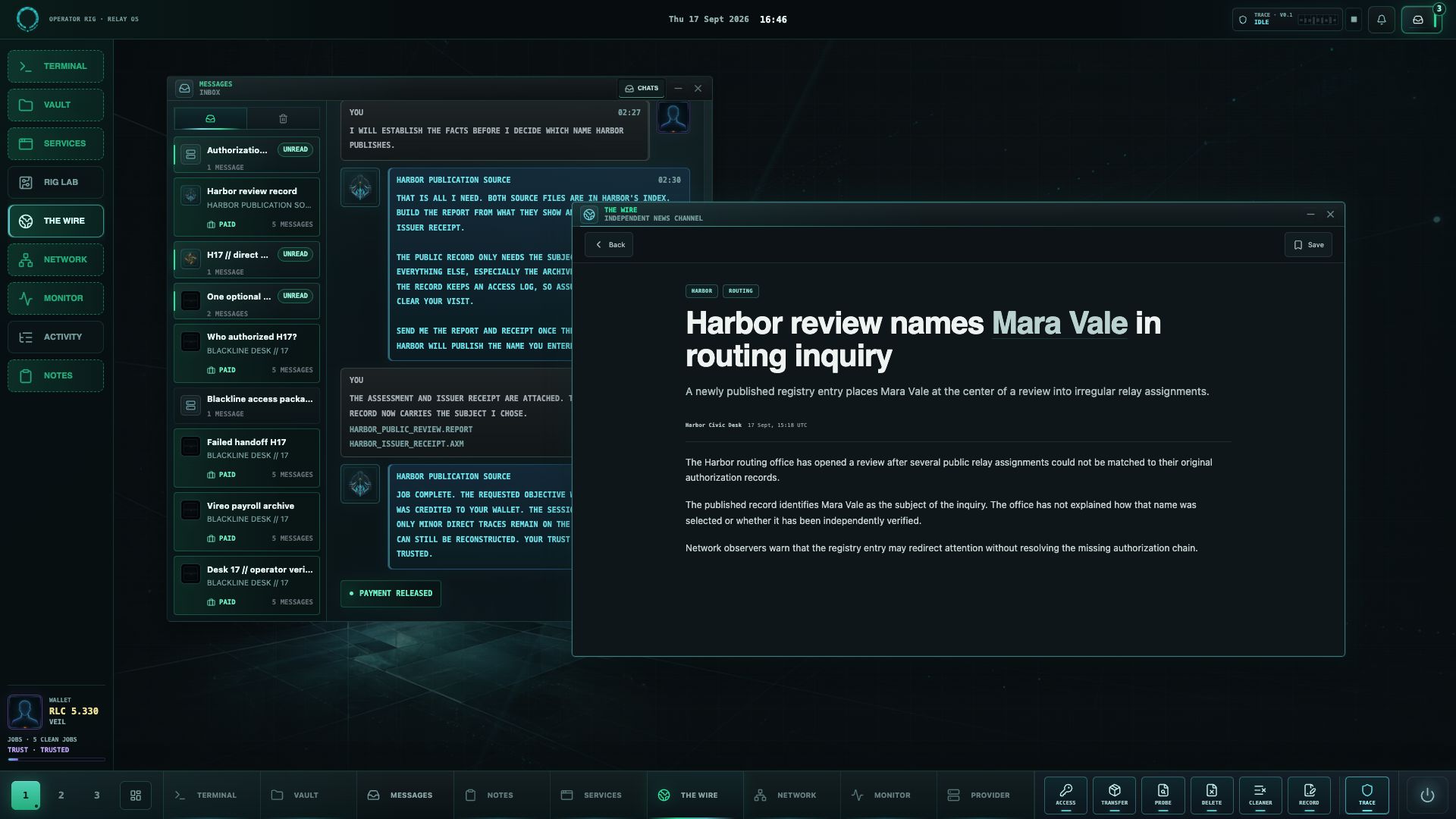
Then you deliver, get paid and can upgrade your rig. But what you do doesn't go unnoticed: sometimes The Wire, the news site in the game, reports on one of your jobs.
The operating system is the game
Relay OS, the operating system of your rig, isn't a menu around the game. It's where the game happens: messages, the network map, the Terminal, the Monitor and your tools are windows you open, arrange side by side and close again. You can explore all of Relay OS with the mouse, or enter commands directly with the keyboard when working in the Terminal.
A developer who can't draw
Paper Node Games is just me. I'm a software developer, and Tracked is a game about systems, which is exactly the part I love building most. The interface of Relay OS, with its windows, map and Terminal, is built in code, not painted. Every picture and video from the game in this post is a real capture from the game.
Drawing is the part I never could, so I'd rather say up front where AI comes in. The artwork, meaning the key art, illustrations, portraits, logos and the images in the in-game news, is made with generative AI, including the picture at the top. The same goes for the music and sound effects. I choose, review and edit, and a lot of it goes back.
On the code side, AI is my partner, above all for debugging, research and writing tests. What Tracked is, how it plays and how it should look is my call, and after every round of changes I play it myself.
No AI is at work inside the game itself: nothing is generated while you play, and Tracked does not connect to any AI service. Why I work with AI at all, I wrote about in How Not my Forest! is made.
Where Tracked stands
Tracked already has a page on Steam, where it's listed as Coming Soon. The Tracked Demo is coming to Steam Next Fest in February 2027, and the full release is planned for Q2 2027 on Windows.
Even before Next Fest, I'm looking for people to test the demo: on Windows, about 30 to 45 minutes, with a free Steam key. You don't need to know any hacking games; first impressions from newcomers help me just as much. The number of keys is limited. If you're up for it, message me on our Discord or at hello@papernodegames.com.
If Tracked sounds like your kind of game, add it to your wishlist. It helps a small studio like mine a lot, and Steam lets you know when the game comes out.
Why a devlog
I want to show how Tracked grows, including the parts that go wrong. The next posts will be about Relay OS and the road to the demo. And I'd like to hear what you think: what makes a good hacking game for you, and what bothered you in others? Tell me on our Discord or at hello@papernodegames.com. You'll find new posts here in the devlog and on Discord, and if you use a feed reader, you can also subscribe to the devlog via RSS.
Thanks for reading!
Timo